International Hotel & St. Mary's Catholic Center
historic grounds remembered
| click on image to view video clip |
In the 1800s, the International Hotel at the corner of Kearny St. and Jackson St. in San Francisco, was a high-class hotel. In 1907, it was rebuilt after the original hotel was destroyed by the 1906 earthquake. |
|
|
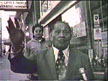
In the 60s and 70s, the SRO International Hotel, home to over 70 seniors, served as the focal center for the Filipino community as part of a 10-block area, populated by 10,000 Filipinos, known as “Manilatown.” The 3-story brick building with a café, pool hall, barbershop, and community center provided a host of activities and a sense of belonging to these immigrants, mostly retired male farm workers, merchant seamen, and domestic servants whose families were banned from the US due to strict immigration laws of the 20s and 30s. |
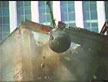 |
The expansion of San Francisco’s financial district in the 1960s displaced the community of “Manilatown” when building after building was demolished and replaced with high-rise construction and high-rent housing and corporate businesses in what became prime real estate.
|
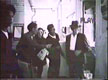 |
The International Hotel struggled to remain as one of the few affordable housing complexes in the neighborhood. With the cost of rent at $50 per month, inhabitants of the I-Hotel sustained their living conditions through their Social Security checks.
|
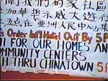 |
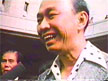
In 1968, the Milton Meyer Co., a branch of the real estate empire Walter Shorenstein, purchased the site with plans to evict the I-Hotel tenants, demolish the building, and develop a multi-level parking garage. A 9-year battle, which included street protests, police interaction, and a hearing in the California Supreme Court, shifted focus from the Milton Meyer Co. to new owner Four Seas Investment Corp. in 1973. Although the City attempted to purchase the hotel through eminent domain, the courts upheld Four Seas’ plans for demolition and construction of a high-rent office tower. |
 |
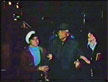
A coalition of political, labor, religious, and cultural groups from all around the Bay Area and the country gathered in support of the I-Hotel, as well as to protest corporate takeovers. For months, the area around the I-Hotel was crowded with protesters, banners, and police patrol.
|
 |
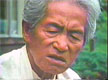
At 3AM on August 4, 1977, the SF police busted through 3,000 protestors and carried out over 50 seniors of the I-Hotel, permanently sealing the building. Two years later, the building was demolished.
|
 |
The eviction and demolition of the I-Hotel not only displayed the displacement of minority tenants, but outlined the critical concerns of affordable housing, homelessness, and poverty in the booming urban context both regionally and nationwide.
|
|
“The Fall of the I-Hotel” used with permission. Copyright 1983, 1994 by Curtis Choy. All rights reserved. For information about 16mm film prints or video, please contact chonkmoonhunter@yahoo.com
|