The Museum in the Park: A Storied Past, A Bright Future
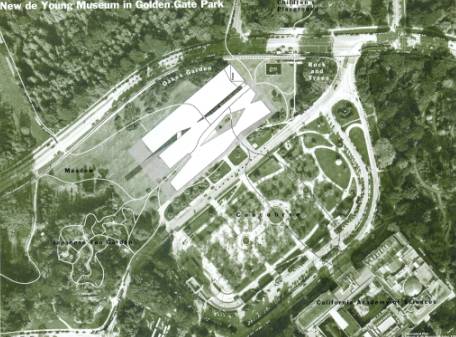
“Over the last one hundred years, the de Young, the Academy of Sciences, the
Tea Garden, the Conservatory and Strybing Arboretum have helped turn the park
into one of the richest and most vibrant urban oases in the world. These
institutions, including the de Young, have become integral to San Franciscans,
idea of what Golden Gate Park is for: nature, recreation and culture. According
to The San Francisco Partnership for Parks, 1998 report, for example, 73% of
Bay Area residents polled would rather visit the de Young Museum and the
Academy of Sciences in Golden Gate Park than downtown.
Recently, San Franciscans have also come to realize that these institutions
play another important role in the park. They help anchor public attention and
resources - both of which are critical to making the park safe and clean for
all San Franciscans. As the San Francisco Museum of Modern Art and Pacific Bell
Park have consolidated the city's crusade for urban renewal south of Market, so
the new de Young, along with renovations of the Academy and Conservatory, will
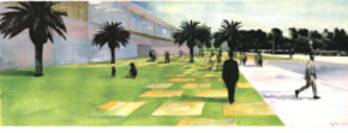
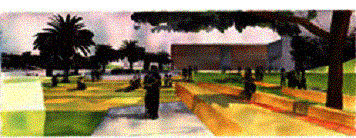
serve to rejuvenate Golden Gate Park. The new park-friendly de Young is
designed specifically to revitalize the idea of the "museum in the
park." The new design harmonizes the de Young with the concourse and the
park as effectively as SFMOMA's building suits the downtown.
Finally, the unique environment that now exists in the park, with the blending
of nature and culture, has made it a centerpiece of the city's educational
infrastructure. The same San Francisco Partnership for Parks report found that
"educators expressed a nearly unanimous preference for the Golden Gate
Park location [for the de Young and the Academy]." Today we have made it a
civic value to unite nature and culture in Golden Gate Park because we know
that it is critical to our children's education and our quality of life.
Golden Gate Park will always be subject to competing priorities, budgetary
constraints, enthusiastic use and, inevitably, natural disaster. The new de
Young will be a positive and stabilizing force in and for the park.
The new de Young will:
- Integrate the Museum into the Park and the Park into the Museum,
revitalizing the idea of the "museum in the park";
- Make the arts and education key partners in the overall renewal of
Golden Gate Park;
- Tell the story of the arts of the Americas as it's never been told before
- as a dynamic collective narrative ranging from the ancient civilizations
of Mesoamerica to contemporary America;
- Connect San Francisco to the world through its diverse collections
and important visiting exhibitions;
- Affirm that art truly matters to all of us, as individuals and as
communities;
- Be a landmark American museum to honor the City's
greatest strength, its diversity.
Learn about the History of the Museum
The new de Young will serve as a model for how museums can better integrate diverse collections, facilitate the crossing of boundaries that have traditionally kept art compartmentalized in rigid categories, and allow for the greatest understanding of our pluralism. It will be the ideal blend of the museum's rich traditions and progressive ideas. Its distinctive identity will be reflected in the uniqueness of its exhibitions and programs, as well as in the building itself—the hallmark of all great museums.
Our vision for this new de Young will secure a lasting legacy for San Francisco
and the hundreds of thousands of visitors the Museum attracts each year. It
will not be long before everyone will be able to look out from the tower of the
new de Young, to all parts of the city - to Lincoln Park and the Golden Gate
Bridge, to downtown and the financial district, to Mount Sutro and the Mission,
and to Ocean Beach and the Avenues - and get the full sense that their visit to
the de Young has brought them into the heart of San Francisco.
Our Vision
Today the de Young is a great American art museum.
It holds a central place in the cultural life of our community: as the
principal collector, steward and exhibitor of some of the City's most important
art collections, a center for art education and cultural awareness in the city
and the region, and, until recently, the dominant special exhibition center in
the west. But where the de Young as an institution has evolved, maturing
deliberately into each of these roles, the physical museum has been cobbled
together. As an institution we have found our mission as the City's art museum,
but the ramshackle complex of seismically and functionally inadequate
structures that comprise the current de Young facility must be replaced if we
are to pursue this mission successfully into the next century. Our de Young
Museum is strong in spirit, but in desperate and immediate need of a new home.
One hundred and five years ago Michael de Young asked the people of San
Francisco to accept a series of buildings in the process of becoming a museum.
Now we need a new facility for the exceptional museum we've become. We are not
building a new de Young out of nostalgia for the old. Instead, we are building
the de Young a new home to fully realize and nourish the strengths and
traditions that make our institution so vital: diverse collections, imaginative
programs and a broad community of people who care deeply about culture in San
Francisco.
Just a few years ago, the board turned the necessity of retrofitting the Legion
of Honor into an occasion for the rejuvenation of the museum. Now the time has
come to turn our energies to the de Young. What began as an obligation has
become an opportunity.
Bringing the World to San Francisco
From its beginnings in the California Midwinter International Exposition of 1894,
the de Young has connected San Francisco to the world, and our city's
communities to each other, through its collections, exhibitions and programs.
Collections
The de Young's collections have come a long way from the days when they
consisted of "23,000 stuffed birds, and eggs of every biped that ever had
wings," a German World War I battle plane and the skin of a flying
squirrel. Today, the de Young houses outstanding collections of arts of the
Americas, textiles, and art from Oceania and Africa. Over the years, the de
Young has built these collections through 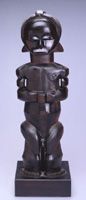 gift,
bequest and purchase.
gift,
bequest and purchase.
These prestigious collections have come to San Francisco because the de Young
has always inspired confidence in donors wanting to invest their collections on
behalf of the people of the western United States. A new de Young is, perhaps,
the best investment we will ever make in collection development for the future.
As we have seen with SFMOMA, new museums are magnets for new collections. Only
a new building will ensure that the de Young remains the place where prominent
national collections find a home on the west coast.
In addition to being a stronger lure for new collections and a safer and more
hospitable home for the City's art, a new de Young will enable us to use the
collections to make a progressive and compelling case for an integrated
portrayal of the arts of the Americas as a dynamic collective narrative ranging
from the ancient civilizations of Mesoamerica to contemporary America.
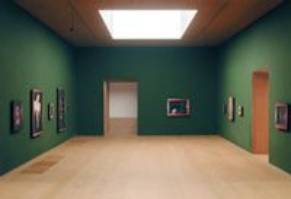
Exhibitions
The de Young has been a leader and model for the international rise of the
special exhibition, beginning with the spectacular success of the California
Midwinter Exposition and its successors the Panama-Pacific International
Exposition (1915) and the Golden Gate International Exposition (1939-40) and
continuing through every decade of this century, right up to the exhibitions we
are still familiar with today. From The Treasures of Tutankhamun (1979) to The
New Painting: Impressionism (1986) and Teotihuacan: City of the Gods (1993),
the de Young's exhibition program has been San Francisco's window on the world.
De Young exhibitions have supported the careers of great California artists
such as Wayne Thiebaud and Richard Diebenkorn, revived and stimulated interest
in ancient and native cultures, and nourished the public's interest in
archaeology, history and art.
Major traveling exhibitions are the world’s premier vehicles for cross-cultural
dialogue and one of the engines of the cultural tourism so important to San
Francisco's economic well-being. The de Young has excelled in organizing and
drawing the most compelling and meaningful of these shows. In this it has
always reflected the uniquely inquisitive, discerning and diverse nature of San
Francisco and its citizens.
Programs
Public education and enrichment are the reasons that museums, including the
de Young, were created. For decades the de Young has been at the forefront of
the  movement
among American museums to educate the public through art. Our educational and
community programs are among the most progressive, the most accomplished and
the most comprehensive in the country: Free School Tours, Doing & Viewing
Art, the Museum Ambassador Program, Poets-in-the-Galleries, the Education
Resource Center, Gallery One, classes and workshops for high school students,
college students and teachers, community lectures and tours, Big Kids/Little
Kids. On the other side of the spectrum, the Museum's community-based
exhibition planning committees have broken new ground in using the Museum's
exhibition program to strengthen the ties between the Museum and the
communities we serve.
movement
among American museums to educate the public through art. Our educational and
community programs are among the most progressive, the most accomplished and
the most comprehensive in the country: Free School Tours, Doing & Viewing
Art, the Museum Ambassador Program, Poets-in-the-Galleries, the Education
Resource Center, Gallery One, classes and workshops for high school students,
college students and teachers, community lectures and tours, Big Kids/Little
Kids. On the other side of the spectrum, the Museum's community-based
exhibition planning committees have broken new ground in using the Museum's
exhibition program to strengthen the ties between the Museum and the
communities we serve.
Taken together, these programs have earned the de Young recognition as a
national leader in arts education and community outreach. It is no accident
that every 5th grader in the city visits the de Young as part of their
curriculum. A new de Young is essential to ensuring that we will continue to be
a leader among museums in serving the educational needs of our constituencies.
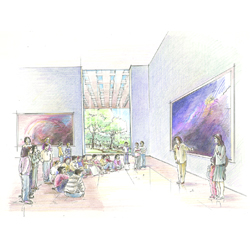
Our Common Ground
The traditional view of the role museums play in society relates primarily
to preserving our cultural heritage, with "our," not deliberately but
almost inevitably, relating to whoever founded the museum, and
"heritage" meaning whatever was most important to them. Through
accident of birth and the unique spirit of San Francisco, the de Young is
different. It wasn't built to house someone's collection, or to collect a
particular kind of art or artifact or to teach the public the value of a
certain aesthetic over another. It was born out of the idea that San Francisco
and its citizens should engage the world. And even though the de Young has left
its hodgepodge collections behind and become home to the City's art, it retains
a unique sense of wonder and openness, and an all-inclusiveness it had when it
was still the City's "attic."
The de Young Museum tradition is the belief that the City needs a common ground
where - through art - the usual boundaries that separate us from each other -
culture, creed, race and all the others - become bridges that connect us. In
the new de Young, this unique character, this remarkable tradition, this
uncompromising dedication to access will be integrated into the very structure
of the building itself.”
|
Copyright ©
2003 Fine Arts Museums of San Francisco |
|
|
Source: http://www.deyoungmuseum.org/deyoung/about/