|
The politics of modern
design within a historic downtown district & the dialog between past
& present.
|
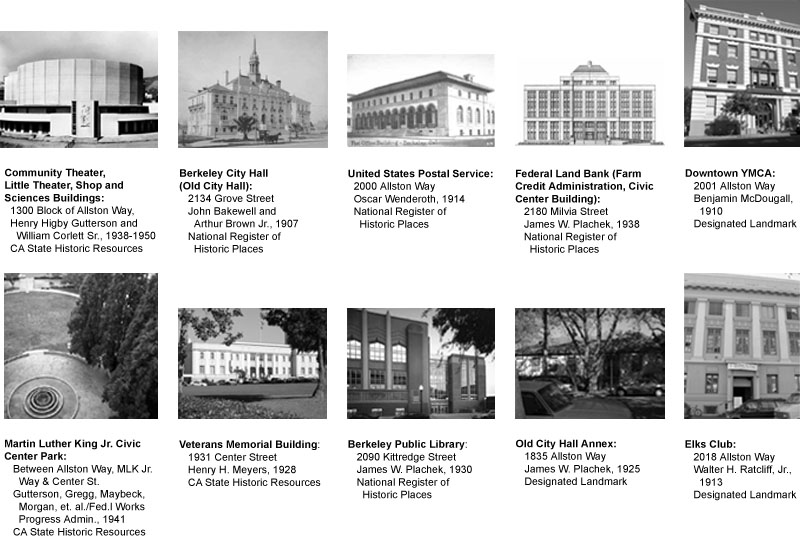
Berkeley's Civic Center Historic District While
sited in downtown Berkeley, amongst many historic and landmark
buildings, the design of the school was near completion when the Civic
Center Historic District was officially recognized.
In May 1998, the district was listed on the California Register
of Historical Resources and the National Register of Historic Places.
The statement of significance states in part: "These diverse community buildings,
located in Berkeley's most important public space, reflect significant
social aspects of Berkeley's history, important to the citizens' health,
safety, and welfare. The
park layout and its buildings were executed by renowned designers and
fortunately the district is largely unaltered and retains a high degree
of integrity. As a result,
Berkeley's Civic Center is locally significant as an ensemble of
harmoniously planned buildings and as a collective body of civic
architecture" Placement within this district provides fodder for those opposed to various aspects of the design and opens up the question of how to design in a historic district.
Resources: October
28, 1998 letter from the Landmarks Preservation Commission to the
Berkeley Unified School District regarding historical status and
possible implications: January
13, 1999 letter from the Office of Historic Preservation to the
Landmarks Preservation Commission states exact implications of placement
on the National Register of Historic Places: March 30, 1999 letter from the Office of Historic Preservation to Mayor Shirley Dean asking the city to pressure the BUSD to comply with their requests: S.F. Gate article, February 28, 2000, on Berkeley's Landmarks Preservation Commision's battle for Martin Luther King Jr. Civic Center Park: |